
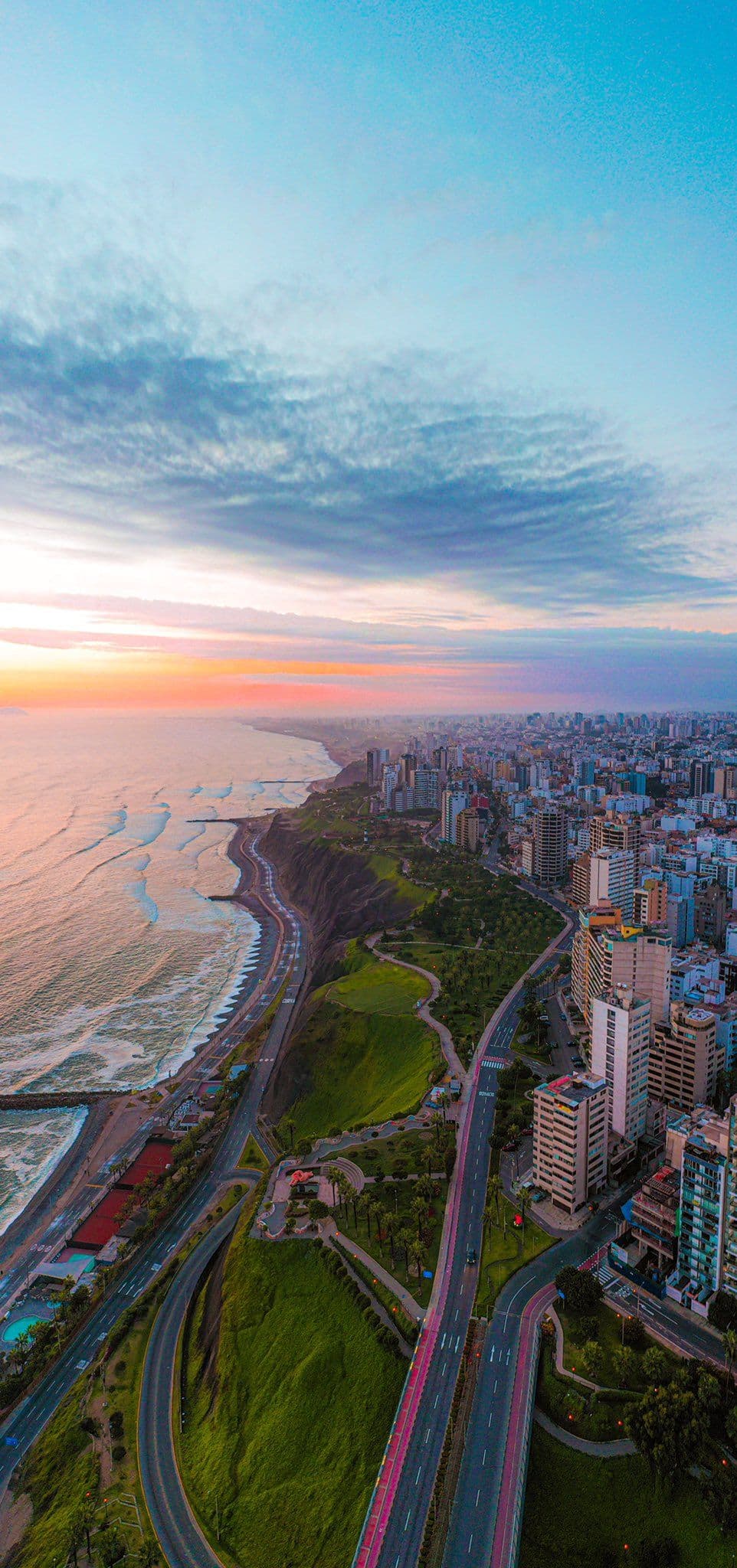
Lima isn't what you expected. It's better.
Most guides about Lima tell you the same thing: eat ceviche, visit Miraflores, be careful. We actually live here. This guide was written from the real experience of 300+ people from 20+ countries who chose Lima as their base.
Neighborhoods: where to live based on your style
Miraflores — The safe classic
The most popular neighborhood among foreigners. Ocean-view boardwalk, cafes on every corner, well-stocked supermarkets. It's expensive for Lima (S/. 1,800-3,500 for an apartment), but if you're coming from Europe or the US, it'll feel cheap.Best for: Digital nomads who want comfort, remote workers, couples.
Barranco — The creative one
If Miraflores is the "proper" neighborhood, Barranco is the one with personality. Murals, craft bars, galleries. Younger, more artistic, louder on weekends. Similar prices to Miraflores but with more vibe.Best for: Creatives, young people, people who want to walk to nightlife.
San Isidro — The financial district
The most expensive and corporate district. Modern buildings, manicured parks, embassies. Quiet, clean, a bit boring. Good option if you work in an office in Lima.Best for: Corporate expats, high-budget families.
Magdalena / Jesús María / Pueblo Libre — The local picks
These neighborhoods don't appear in any tourist guide, but many LIC members live here. They're cheaper (S/. 900-1,800), more authentic, and 15-20 minutes from Miraflores. This is where you understand how Lima really lives.Best for: Budget-conscious people, locals, exchange students.
Real cost of living (2026)
| Category | Monthly range (S/.) |
|---|---|
| Rent (1 bedroom, Miraflores) | 1,800 - 3,500 |
| Rent (1 bedroom, Magdalena) | 900 - 1,800 |
| Food (cooking + eating out) | 800 - 1,500 |
| Transportation | 150 - 400 |
| Internet + phone | 100 - 180 |
| Health (private insurance) | 200 - 500 |
| Comfortable total | 3,500 - 6,000 |
Visas: your options
Tourist (183 days)
You enter with your passport, no extra paperwork needed for most nationalities. You get 183 days. Many nomads do "border runs" to Ecuador or Chile, but it's not sustainable long-term.Digital Nomad Visa
Peru launched this visa in 2023. Requirements: prove income of at least $2,500 USD/month and health insurance. Lasts 1 year, renewable. Best option if you work remotely.Student Visa
If you're on exchange at a Peruvian university (PUCP, UPC, etc.), the university helps with the paperwork. Lasts as long as your program.Work Visa
You need a Peruvian company to sponsor you. More bureaucratic but doable.Safety: what nobody tells you
Lima isn't Switzerland, but it's not the jungle Reddit forums paint either. The reality:
- Miraflores, Barranco, San Isidro: very safe day and night. You can walk around freely.
- Downtown Lima (Centro): safe during the day, avoid at night if you don't know the area.
- Basic rules: don't use your phone walking in unfamiliar areas, use ride-hailing apps (not street taxis), be aware of your surroundings.
Why Lima
- Food: Gastronomic capital of South America. Not an exaggeration.
- Weather: Mild year-round. Never truly cold, never extremely hot.
- Timezone: GMT-5. Same as New York. Perfect for working with the US and Europe.
- Flights: LATAM Airlines hub. Direct flights to all of South America, US, and Europe.
- Cost: High quality of life at a low price compared to Buenos Aires, Santiago, or Bogotá.
- People: Peruvians are incredibly warm. Period.
Your first move
If you just arrived in Lima and don't know anyone, your first step is joining a real community. Not a Facebook group with 10,000 people who never meet. Something where people actually show up.
Lima International Community organizes football 2-3 times a week, social events, trips, and more. 300+ people from 20+ countries. Just show up.